Emteq Labs Blog & Scientific Updates
Explore the latest articles on optomyography (OCO™), facial expression sensing, XR biofeedback, and affective computing.
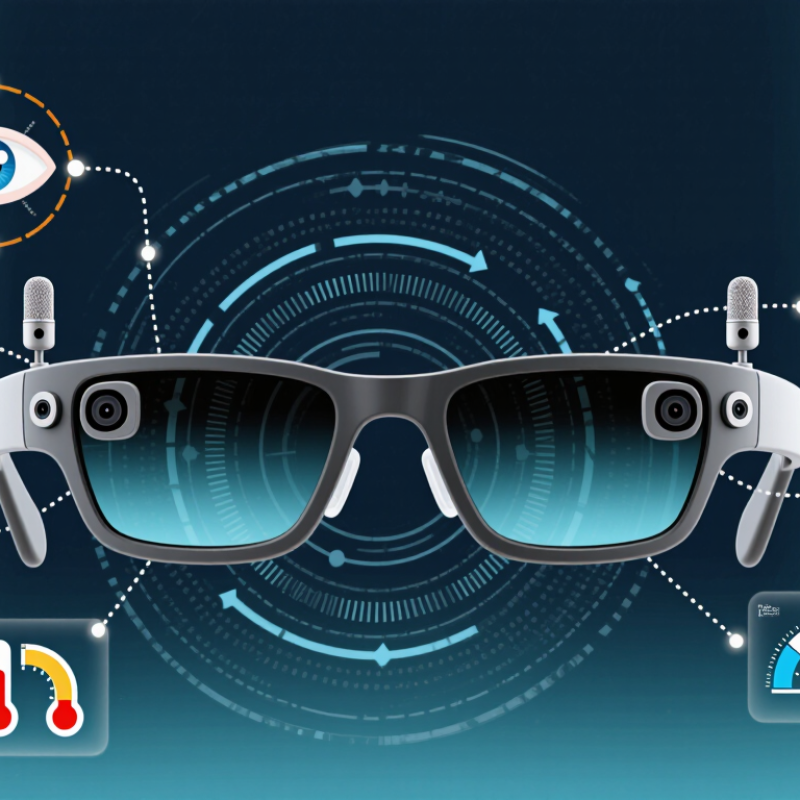
Emotion-sensing eyewear is changing how machines interpret human attention, stress, and emotional response. These glasses may combine miniature cameras, eye-tracking sensors, microphones, and physiological measurements. The hardware sits close to the face. It can observe blinking, pupil movement, gaze direction, voice patterns, or skin changes.
But these signals are not emotions themselves. They are clues.
Rosalind W. Picard, an MIT professor and founder of Affectiva, wrote, “Computers need to have emotional intelligence.” Her work helped establish affective computing as a serious research field. It also reminds us that technology should support people, not pretend to understand them perfectly.
In practice, Emotion-sensing eyewear collects signals, processes them through software, and compares patterns with trained models. A sudden change in gaze may suggest distraction. Faster blinking might indicate fatigue. A warmer skin reading could reflect stress, movement, or room temperature. Context matters greatly.
The technology remains imperfect.
A device can misread concentration as tension. It can mistake bright light for pupil response. Personal differences also matter. One person’s quiet focus may look like emotional withdrawal to an algorithm.
This article explores what Emotion-sensing eyewear measures, how its sensors work, and where interpretation becomes uncertain. It also considers calibration, data security, consent, and real-world reliability. Clear limits are essential. Emotional inference should remain an aid, not a final judgment about someone’s inner state.
Definition and Core Components of Emotion-Sensing Eyewear
What Is Emotion Sensing Eyewear and How Does It Work?
Emotion-sensing eyewear refers to glasses that estimate a wearer’s emotional state from physical and behavioral signals. They do not directly read thoughts or identify feelings with certainty. Instead, small sensors collect changing data around the eyes, skin, and head.
Core components may include infrared eye-tracking cameras, optical pulse sensors, skin-temperature sensors, and motion detectors. Some designs also use microphones to analyze speech patterns, although voice data requires careful consent. A miniature processor combines these signals with software models. For example, faster blinking, increased pulse, and a warmer skin surface may suggest stress or excitement. The system then displays an estimated state through an application or a subtle visual alert.
Signals are messy. A raised pulse can reflect anxiety, exercise, caffeine, or a crowded room. This makes emotion sensing an interpretation, not a medical diagnosis. Reliable systems should explain their limits, protect recorded data, and allow users to disable monitoring. In practical evaluations, calibration matters because glasses fit differently on every face. Lighting, skin contact, movement, and prescription lenses can also affect performance. The technology is promising, but its results need human judgment. Some readings will be wrong. That weakness deserves attention.
What Is Emotion Sensing Eyewear and How Does It Work? - Definition and Core Components of Emotion-Sensing Eyewear
| Data Dimension | Definition or Component | How It Works | Typical Output or Role |
|---|---|---|---|
| Technology Definition | Wearable eyewear designed to estimate emotional or affective states from physiological, behavioral, and contextual signals. | Sensors collect signals, software processes them, and algorithms infer patterns associated with states such as stress, engagement, or calmness. | An estimate or probability score rather than a direct measurement of a person’s feelings. |
| Physiological Sensing | Measurement of bodily signals related to autonomic nervous system activity. | Optical or electrical sensors may monitor changes such as pulse-related activity, skin conductance, or temperature, depending on the eyewear design. | Features associated with arousal, workload, stress response, or relaxation. |
| Eye-Activity Sensing | Tracking of eye and eyelid behavior. | Infrared cameras, reflective sensors, or embedded motion sensors can estimate gaze direction, blink rate, pupil changes, and fixation patterns. | Indicators of visual attention, fatigue, cognitive effort, or response to stimuli. |
| Facial and Muscle Activity | Detection of subtle movements around the eyes, forehead, or other facial areas. | Electromyography, optical sensing, or motion analysis can identify muscle activity and changes in facial expression. | Features that may contribute to recognizing expressions or affective reactions. |
| Motion and Posture Data | Movement information captured from the frame or an attached wearable module. | Accelerometers and gyroscopes measure head motion, orientation, and changes in movement patterns. | Context for distinguishing emotional responses from motion artifacts or changes in activity. |
| Environmental Context | Information about the wearer’s surrounding conditions and interaction context. | Ambient-light, sound-level, proximity, location, or connected-device data may be combined with physiological signals where permitted. | Improved interpretation of whether a response may relate to noise, brightness, social interaction, or a specific event. |
| Signal Processing | Preparation of raw sensor data for analysis. | Software filters noise, corrects motion artifacts, synchronizes signals, and extracts measurable features over time. | Cleaned data and numerical features suitable for classification or trend analysis. |
| Machine-Learning Inference | Algorithmic estimation of affective states from multiple signal features. | A trained model identifies statistical patterns and maps them to predefined categories, dimensions, or continuous scores. | Possible outputs include valence, arousal, stress likelihood, attention level, or fatigue probability. |
| Calibration and Personalization | Adjustment of measurements and model interpretation for an individual wearer. | Baseline readings, fit checks, self-reports, and repeated observations can help account for personal differences. | More consistent individual trends, although personalization does not eliminate uncertainty. |
| Data Transmission | Transfer of processed or raw data between the eyewear and another computing device. | Wireless or wired connections can send data to a smartphone, computer, edge processor, or secure cloud service. | Real-time feedback, historical analysis, visualization, or integration with other applications. |
| User Feedback | Information returned to the wearer or an authorized system. | A companion interface may display trends, alerts, summaries, or recommendations based on inferred states. | Self-awareness tools, workload support, accessibility functions, or research data. |
| Accuracy Considerations | Factors that affect the reliability of emotion estimates. | Fit, skin and lighting conditions, motion, sensor quality, individual physiology, cultural expression, and training data can influence results. | Outputs should be treated as probabilistic indicators, not definitive psychological diagnoses. |
| Privacy and Ethics | Protection and responsible use of sensitive biometric and behavioral information. | Systems should use informed consent, data minimization, access controls, secure storage, transparent processing, and appropriate retention policies. | Greater user control and reduced risk of unauthorized profiling or misuse. |
Note: Emotion-sensing eyewear infers possible affective states from correlated signals. It does not directly read emotions, and results can vary by person, environment, sensor configuration, and algorithm.
FAQS
It is eyewear that estimates emotional states from physical and behavioral signals. It may monitor eye movement, pulse, skin temperature, voice, and head position. It does not read thoughts. The result is an informed guess, not certainty.
Small sensors collect changing data around the eyes, skin, and head. Software combines blinking, pulse, gaze, movement, and temperature patterns. For example, faster blinking and a raised pulse may suggest stress. Signals get messy.
Accuracy varies between people and situations. Exercise, caffeine, tiredness, bright lighting, or crowded rooms can change readings. Skin tone, language, movement, and prescription lenses may also affect performance. Some results will be wrong.
No. Its output is a probability-based estimate. A clinician should not treat one reading as a diagnosis. Human judgment and controlled assessments remain necessary. Overconfidence would be a mistake.
Possible uses include accessibility support, immersive learning, and driver-attention research. A teacher might notice repeated confusion during a lesson. A clinician could observe stress patterns during a controlled assessment. The device should support decisions, not quietly replace them.
It may collect intimate video, audio, gaze, and biometric information. People should know when monitoring is active. Clear consent, encryption, and short data retention are important. That feels uncomfortable.
Users should be able to disable sensing easily. They should also refuse monitoring without losing essential services. Local processing and simple deletion options can reduce exposure. Consent must remain meaningful.
Glasses fit differently on every face, changing sensor contact and measurements. Lighting, movement, skin contact, and lenses can distort readings. Testing should compare false positives across different groups. Average accuracy alone is not enough.
Conclusion
Emotion-sensing eyewear is a wearable technology designed to estimate a person’s emotional state by combining physiological and behavioral information. Its core components may include cameras, eye-tracking systems, motion sensors, microphones, and sensors that monitor signals such as heart rate, skin response, facial movement, gaze direction, voice characteristics, and body posture. These devices collect data continuously or at selected moments, depending on their design and intended use.
The collected signals are processed through software that identifies patterns associated with emotions such as stress, attention, calmness, confusion, or excitement. Rather than directly “reading” thoughts, Emotion-sensing eyewear provides probability-based interpretations that can support communication, learning, accessibility, workplace training, or personal wellbeing. Its accuracy may vary according to lighting, sensor quality, individual differences, cultural expression, and environmental conditions. Because emotional data is highly personal, responsible systems should prioritize informed consent, secure storage, transparent explanations, limited data collection, and user control. Ethical design is essential to prevent inaccurate conclusions, unwanted monitoring, or unfair decisions.