Insights & Publications

Emteq Labs Blog & Scientific Updates

Explore the latest articles on optomyography (OCO™), facial expression sensing, XR biofeedback, and affective computing.

0%

Facial rehabilitation is becoming more measurable, yet the face remains difficult to assess. Small changes matter. A slight cheek lift, delayed blink, or uneven smile can reveal progress that ordinary photographs miss. The 2026 Best Facial Rehabilitation Tracking Device Guide examines tools designed to capture these changes with greater consistency.

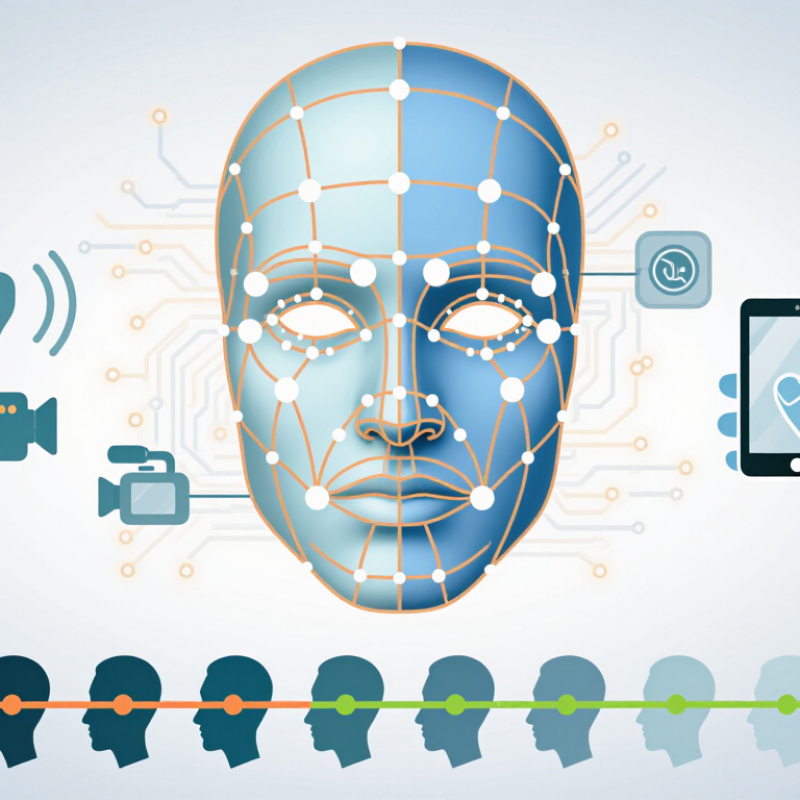
A Facial rehabilitation tracking device may use video analysis, facial landmarks, motion sensors, or clinician-reviewed recordings. These systems can track symmetry, movement range, timing, and unwanted muscle activity. Facial nerve specialist Dr. Babak Azizzadeh has emphasized that rehabilitation should pursue “coordinated, natural movement, not movement alone.” That principle matters when comparing devices. A higher score does not always mean a better recovery. Clinical interpretation remains essential.

This guide considers measurement accuracy, comfort, data security, software usability, and professional oversight. It also examines how devices perform in real settings, including a quiet clinic room, a patient’s home, and a short daily exercise session. Reliable tracking should support therapy rather than replace it. It should help clinicians notice gradual improvement and help patients understand their own movement patterns.

Some limitations deserve attention. Facial lighting can distort results. Camera angles can change symmetry readings. Fatigue may affect performance. These details are easy to overlook. Therefore, readers should treat device data as evidence, not as a final diagnosis. The strongest options combine repeatable measurements with experienced clinical judgment, transparent validation, and practical rehabilitation goals. Progress is rarely perfectly linear. That is normal.
2026 Best Facial Rehabilitation Tracking Device Guide

Classify Facial Dysfunction: House–Brackmann I–VI, Sunnybrook 0–100

Facial rehabilitation tracking should begin with a clear clinical language. The House–Brackmann scale grades overall facial nerve function from I to VI. Grade I indicates normal movement, while Grade VI reflects complete paralysis. This six-level system is quick and familiar, but it can miss small changes between visits. A device may record eyebrow lifting, eye closure, smiling, and mouth movement under consistent conditions.

The Sunnybrook Facial Grading System offers greater detail, using a 0–100 score. It examines resting symmetry, voluntary movement, and synkinesis, or unwanted linked movements. Higher scores generally indicate better function. A tracking device can compare left and right movement, measure facial angles, and display changes across therapy sessions. Not a diagnosis. Clinician review remains essential.

Reliable measurement depends on practical details. Use the same camera distance, head position, lighting, and facial commands each time. A patient who smiles widely may score differently from one using a gentle smile. Fatigue matters too. Automatic readings can also confuse skin folds, glasses, or uneven lighting with weakness. That limitation deserves attention. The best record combines device data, House–Brackmann grade, Sunnybrook score, therapist observations, and the patient’s daily experience. A small numerical improvement may still represent meaningful progress, especially when eating, speaking, or closing one eye becomes easier.

Compare Sensors: 30–60 fps, Depth Capture, and Measurement Accuracy

A reliable facial rehabilitation tracker must capture small movements, not just attractive images. At 30 fps, each frame arrives every 33.3 milliseconds. At 60 fps, that interval falls to 16.7 milliseconds. This matters when measuring rapid blinking, lip closure, or brief asymmetry. However, higher frame rates cannot correct poor lighting, motion blur, or unstable positioning. The ISO 5725 measurement framework separates trueness from precision, a useful reminder that repeated readings may still be consistently wrong.

Depth capture adds another layer. A 2023 review in the journal Sensors reported that facial measurement performance varies widely with camera distance, head angle, skin visibility, and lighting. Depth data can estimate forward movement, such as cheek lifting or jaw opening, while ordinary video mainly records surface changes. Yet depth sensors may lose detail around hair, glossy skin, or very small movements. Published rehabilitation studies also commonly report measurement errors in millimetres, but their testing conditions differ, so direct comparisons can be misleading.

Tips: Test the device at the actual clinic distance. Record the same smile three times. Compare the average with a trained observer’s rating. Check whether the error stays below the movement change you need to detect. A 60 fps device is not automatically better. In practice, calibration can matter more. I would also question any accuracy claim without its lighting setup, sample size, and reference method. Those missing details often reveal the real weakness.

Verify Clinical Validity with ICC, SEM, MDC, and Test–Retest Data

A reliable facial rehabilitation tracking device should show more than attractive movement graphs. In clinical practice, repeat the same task under controlled conditions. Keep lighting, camera distance, head position, and instructions consistent. Record resting symmetry, smile excursion, and eyelid movement. Small setup changes can alter the result.

Test–retest data reveal whether measurements remain stable across two sessions. The intraclass correlation coefficient (ICC) estimates agreement between repeated measurements. A high ICC is encouraging, but it does not prove clinical usefulness alone. The standard error of measurement (SEM) shows expected measurement noise in the original units. The minimal detectable change (MDC) indicates how much improvement must occur before clinicians can trust that change is real. For example, a two-millimeter increase may look meaningful, yet it may remain below the device’s MDC.

Interpret results beside clinician ratings, patient-reported function, and established examination methods. A pilot assessment should include trained raters, a suitable sample, and transparent missing-data handling. In one early workflow, uneven room lighting created unexpectedly different facial landmarks. We corrected the setup, but that weakness deserves reporting. Another concern is an impressive ICC from a narrow patient group; broader testing may produce less flattering results. Clinical teams should examine confidence intervals, not only headline values. Reliable evidence is repeatable, interpretable, and honest about uncertainty.

2026 Best Facial Rehabilitation Tracking Device Guide - Verify Clinical Validity with ICC, SEM, MDC, and Test–Retest Data

Non-brand-specific clinical validation framework for facial movement tracking devices

Facial Outcome Recommended Measurement Unit Test–Retest Design ICC Target SEM Requirement MDC95 Requirement Clinical Validity Comparator
Resting Symmetry Absolute bilateral difference in landmark position or regional facial distance mm or degrees Two sessions separated by 24–72 hours; identical posture, lighting, camera distance, and instructions ≥ 0.90 for clinical use; ≥ 0.75 may support research or screening use Report in the original unit and as a percentage of the pooled standard deviation Use the smallest change that exceeds measurement noise before declaring improvement Standardized 2D/3D landmark assessment completed by two trained independent raters
Smile Excursion Change in oral commissure position from rest to maximum voluntary smile mm or degrees At least two repeated trials per session; use the prespecified mean or median, not a post-hoc selection ICC(2,1) or ICC(A,1) should be reported; ≥ 0.90 is commonly interpreted as excellent reliability SEM = SD × √(1 − ICC) MDC95 = SEM × 1.96 × √2 Digital facial landmarks, clinician-rated movement scale, or validated photographic scoring performed independently
Eye Closure Palpebral fissure reduction or eyelid closure completeness during maximal voluntary closure mm, degrees, or % Record at least three valid closures; control for blinking, head rotation, and compensatory brow movement Target ICC ≥ 0.90 for serial rehabilitation monitoring SEM should be presented with a 95% confidence interval where possible MDC95 should be compared with the expected therapeutic change for the selected outcome Blinded expert rating of closure completeness or standardized clinical grading performed independently
Eyebrow Elevation Vertical displacement of the eyebrow or brow landmark from rest to maximum elevation mm or degrees Repeat the same task with neutral facial expression and consistent verbal instructions ICC ≥ 0.75 indicates good reliability; ICC ≥ 0.90 is preferable for individual decisions Report both absolute SEM and relative SEM when scales differ between participants Use MDC95 to distinguish true change from repeated-measurement variation Independent landmark annotation by trained raters using a prespecified facial landmark protocol
Nasolabial Fold Symmetry Side-to-side difference in fold position, angle, or curvature during rest and expression mm or degrees Use the same facial expression intensity and capture timing at every session Report ICC type, confidence interval, and whether the model is single-measure or average-measure SEM must remain in the same unit as the recorded facial feature Calculate MDC95 separately for rest and movement conditions Blinded comparison with standardized photographs or 3D surface landmarks
Lower-Lip Depression Vertical and lateral displacement of the lower lip during a controlled smile or grimace mm or degrees Perform repeated trials with a standardized starting position and rest interval ICC ≥ 0.90 is recommended when the measure is used to track individual recovery Include within-session and between-session SEM if both sources of error are relevant Report MDC95 with the confidence level clearly identified Independent clinician scoring plus landmark-based displacement measurement
Facial Movement Velocity Peak or mean velocity of a predefined facial landmark during a standardized expression mm/s or degrees/s Use synchronized capture rate, stable frame timing, and a prespecified smoothing algorithm ICC ≥ 0.75 is a minimum practical benchmark; higher reliability is required for treatment decisions SEM should account for frame rate, tracking loss, filtering, and event-detection error MDC95 must be calculated from the same processing pipeline used in clinical reporting High-speed video analysis or independently processed motion-capture reference data
Movement Onset Time Time from an external cue to the first prespecified facial movement threshold ms Use randomized cue timing and repeated trials to reduce anticipation and learning effects Report ICC with confidence intervals and examine systematic bias between sessions SEM should be interpreted alongside temporal resolution and synchronization accuracy MDC95 must exceed expected timing error before a clinical change is accepted Independent frame-by-frame coding or synchronized laboratory timing reference
Composite Symmetry Score Prespecified weighted combination of resting and dynamic bilateral facial differences Score or % Define weighting, missing-data rules, trial averaging, and normalization before data collection Report reliability for the total score and every clinically important subscale SEM must be calculated for the final composite score, not inferred from a single component MDC95 should be reported in score units and, when appropriate, as a percentage Validated clinician-rated facial function scale or blinded expert consensus rating
Interpretation rules: ICC evaluates relative reliability, whereas SEM estimates absolute measurement error. MDC95 indicates the minimum observed change likely to exceed measurement error at the 95% confidence level. A high ICC alone does not prove clinical validity; validity should also demonstrate agreement with an independent reference method, prespecified error limits, consistent test conditions, and clinically interpretable change thresholds.
SEM = SD × √(1 − ICC)   |   MDC95 = 1.96 × √2 × SEM

Check Compliance: ISO 13485, IEC 62304, and FDA 510(k) Pathways

For a 2026 facial rehabilitation tracking device, compliance should begin with evidence, not marketing claims. ISO 13485 controls the quality system, including supplier records, risk files, design changes, and corrective actions. The ISO Survey 2023 reported more than 30,000 active ISO 13485 certificates worldwide, showing how widely this framework is used. Certification alone does not prove clinical safety.

IEC 62304 is equally important when software measures facial movement, symmetry, or exercise adherence. Developers should document software classification, hazards, requirements, verification, cybersecurity controls, and maintenance. A missed calibration alert may create misleading progress data. That risk belongs in the software safety file, not only in testing notes. The process can feel excessive. It is still necessary.

The FDA 2024 MDUFA performance framework sets a 90% target for traditional 510(k) decisions within 90 FDA review days. This pathway generally requires substantial equivalence to a legally marketed predicate, supported by bench, usability, electrical, biocompatibility, and clinical evidence where appropriate. Facial tracking claims need careful wording. “Measures movement” is different from “restores function.” A review of FDA clearance databases and published predicate decisions can reveal common evidence gaps, but database searches are imperfect. Human factors testing should include patients with weakness, asymmetry, glasses, facial hair, and uneven lighting. Real rooms are messier than laboratories.

Choose the 2026 Device by Workflow, Privacy, and Outcome Tracking

2026 Best Facial Rehabilitation Tracking Device Guide

Choose the 2026 device by workflow, privacy, and outcome tracking. A useful system should fit treatment, not interrupt it. In outpatient care, setup time matters. A therapist may need baseline facial movements within five minutes. The device should guide repeatable tasks, such as smiling, blinking, raising eyebrows, and puffing cheeks. Clear prompts reduce inconsistent measurements between sessions. Keep it simple.

Outcome tracking needs more than attractive images. Look for stable measures, including movement range, left-right symmetry, task speed, and fatigue changes. Pair device data with clinician observation and patient-reported comfort. A weekly chart can reveal gradual progress that photographs miss. However, measurement error remains possible. Lighting, camera distance, facial hair, and patient effort can change results. Do not treat one score as a diagnosis.

Privacy should shape the purchasing decision. Ask whether processing occurs locally or through a secure server. Confirm encryption, access controls, retention periods, and deletion procedures. Obtain informed consent before recording facial data. Limit collection to information needed for rehabilitation. Consent matters. Clinics should also document calibration, staff training, and software updates. A device that produces detailed reports but slows appointments may fail in real practice. Review performance after several weeks, then adjust the workflow when evidence exposes weaknesses.

2026 Best Facial Rehabilitation Tracking Device Guide

Choose the 2026 device by workflow, privacy, and outcome tracking

The chart compares common device classes used in facial rehabilitation tracking. Scores are a normalized 0–100 feature index based on workflow automation, local-data privacy potential, and repeatable outcome measurement—not clinical efficacy or treatment results. Higher scores indicate stronger capability in that category.

FAQS

Why should facial movement measurements be tested under controlled conditions?

Lighting, camera distance, and head position can change facial landmarks. Keep instructions identical. Small setup changes may create false progress.

What does test–retest reliability show?

It shows whether measurements remain stable across two separate sessions. A reliable device should produce similar results during repeated tasks. That sounds simple. It is not always simple.

What do ICC, SEM, and MDC mean?

ICC estimates agreement between repeated measurements. SEM describes expected measurement noise in the original units. MDC shows the smallest change likely to be real. A two-millimeter improvement may still fall below the MDC.

Which facial movements should a clinical assessment record?

Useful measures include resting symmetry, smile excursion, and eyelid movement. Record the same movements each session. Avoid adding tasks without a clear reason.

Can a high ICC prove clinical usefulness?

No. A high ICC is encouraging, but it cannot prove clinical value alone. Compare results with clinician ratings, patient-reported function, and established examinations. Narrow patient groups can make reliability look better than it is.

What should a pilot assessment include?

Use trained raters and a suitable patient sample. Document missing data clearly. Examine confidence intervals, not only headline values. Early results may look tidy while hiding important weaknesses.

How can room conditions affect facial tracking?

Uneven lighting may create different facial landmarks. Glasses, facial hair, weakness, and asymmetry can also affect measurements. Test in realistic rooms, not only perfect laboratories. Real rooms are messier.

What evidence supports safe clinical software?

Document software hazards, requirements, verification, cybersecurity controls, and maintenance. Include risks from missed calibration alerts. A misleading progress score can affect clinical decisions. That risk deserves explicit documentation.

What should regulatory evidence support?

Evidence should cover bench testing, usability, electrical safety, biological safety, and clinical performance when appropriate. Measurement claims differ from restoration claims. Say what the device actually does. Stronger wording may need stronger evidence.

Conclusion

Choosing the right Facial rehabilitation tracking device in 2026 requires more than comparing camera features. Start by classifying facial dysfunction with recognized scales such as House–Brackmann grades I–VI and the Sunnybrook Facial Grading System, scored from 0–100. Next, evaluate sensor performance, including frame rates of 30–60 fps, depth-capture capability, and measurement accuracy under different lighting and movement conditions.

Clinical validity is equally important. Look for evidence based on intraclass correlation coefficients (ICC), standard error of measurement (SEM), minimal detectable change (MDC), and test–retest reliability. Healthcare providers should also review whether the device development process aligns with ISO 13485 quality practices, IEC 62304 software safety principles, and applicable FDA 510(k) pathways. Finally, select a solution that fits clinical workflow, protects patient privacy, and supports clear outcome tracking over time. The most useful device should turn facial movement data into consistent, understandable progress information for therapists and patients.

Avery

Avery

Avery is a dedicated marketing professional with a strong understanding of product strategy, customer needs, and digital communication. As a key contributor to the company’s content and marketing initiatives, Avery regularly publishes insightful articles on the company website, helping readers......